
Quick Summary
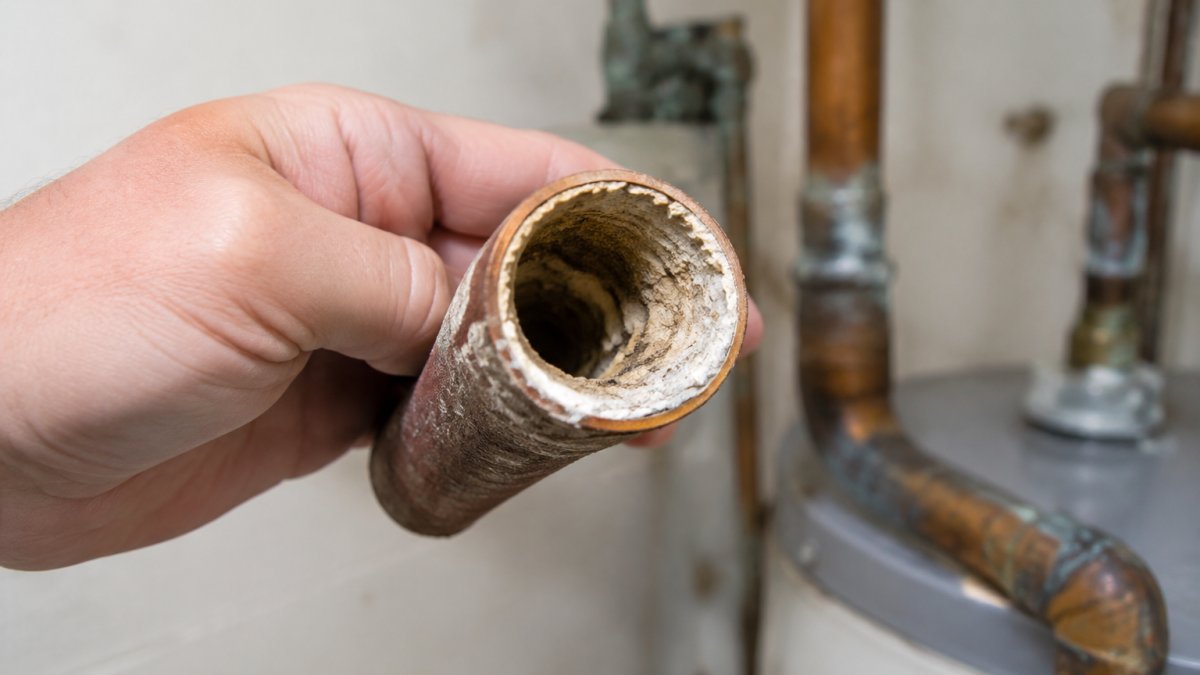
Signs of hard water scale in your pipes include white, crusty deposits around faucets and showerheads, uneven showerhead spray, weak water pressure, and soap that will not lather well. Scale forms when minerals, mostly calcium and magnesium, settle out of water as it heats up or sits still.
- Check faucet aerators and showerheads for white, crusty grit or blocked holes.
- Hold a cold tap and a bathroom tap on at the same time to test pressure.
- Look for sandy sediment when you briefly open the water heater drain valve into a bucket.
- Do not cut into walls or pipes, and do not snake supply lines to look for scale.
- Call a licensed plumber if pressure drops sharply, water runs rusty, or the water heater rumbles.
Table of Contents
- What Hard Water Scale Is and Why It Forms
- Signs of Hard Water in a House
- How to Check Your Pipes for Scale Buildup
- How Long Hard Water Takes to Damage Pipes
- Removing Buildup and Testing Your Water at Home
- Frequently Asked Questions
What Hard Water Scale Is and Why It Forms
Last Updated: November 12, 2026
Hard water scale is a white, chalky crust that builds up inside pipes, faucets and appliances.
Water picks up these minerals as it moves through rock and soil (Hardness of Water). Geological Survey explains that hardness comes from these dissolved minerals (USGS).
Over time, the scale collects on pipe walls and the inside of water heaters. It is slow, but it adds up.
Signs of Hard Water in a House
Scale does not always show up as a big problem at once. Most homeowners notice a few small signs first:
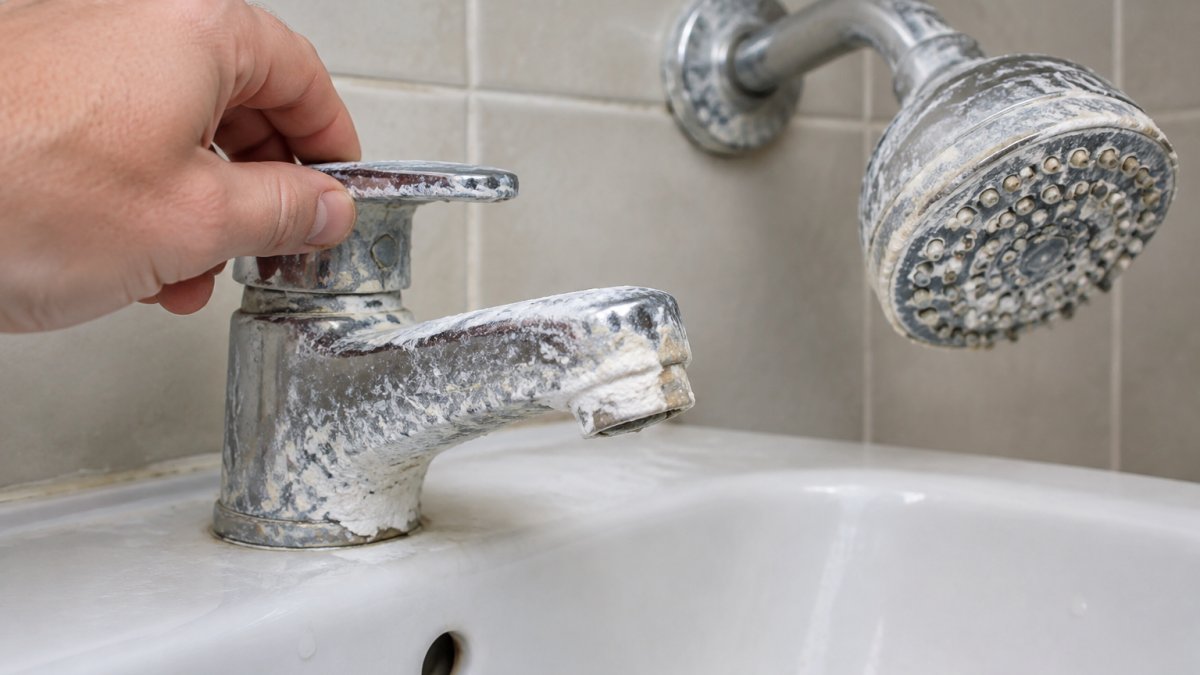
- White or crusty deposits around faucets and showerheads
- Spots on dishes and glassware after washing
- Soap that will not lather well
One common sign is a showerhead that sprays unevenly. The holes get partly blocked by mineral deposits, so the water comes out in weak streams.
Skin and hair can also feel dry or itchy after showering. If these signs sound familiar, you can look at water softener options for your home. Many people blame the soap, but hard water is often the real cause.
How to Check Your Pipes for Scale Buildup
You can check for scale without special tools, but you have to know where to look and what not to touch. Most guides just say “check your fixtures.” Here is the safer, step-by-step version, plus the point where you should stop and call a professional.
Start with the easy, no-risk checks
- Faucet aerators. Unscrew the little screen at the tip of a faucet and look inside. White, crusty grit means minerals are settling out. Soak the aerator in white vinegar for an hour, rinse, and screw it back on.
- Showerheads. Hold the showerhead up to a light. If some holes look blocked or the spray is uneven, scale is likely. You can usually unscrew it by hand and soak it in vinegar.
- Toilet tank. Lift the lid and look at the inside walls and the flapper. A chalky ring or crusty film is a common early sign.
- Water heater drain valve. Put a bucket under the valve near the bottom of the tank, open it briefly, and catch a little water. Sandy or gritty sediment in the bucket points to scale breaking loose inside the tank. Close the valve firmly when done.
- Pressure check at several taps. Turn on a cold tap at the kitchen sink and a bathroom sink at the same time. If both run weak, the problem is likely in the pipes or the main, not just one fixture.
Watch out: Do not open the drain valve on a water heater if it looks corroded or has not been opened in years. It can stick open or start leaking, and then you have a real problem on your hands. If the valve looks rough, leave it alone and have a pro check it.
What you should NOT do yourself
Some checks sound simple but can damage plumbing or cause a leak:
- Do not cut into a wall or pipe to look for scale. You cannot see inside a pipe from the outside, and opening one up means a repair.
- Do not snake or scrub inside a supply line. Supply pipes are under pressure. Poking around inside can loosen scale that then clogs a faucet or valve.
- Do not use harsh chemicals in an attempt to dissolve scale inside pipes. Some products can damage rubber parts, gaskets, or the pipe itself.
When to call a professional
Call a licensed plumber if you see any of these:
- Water pressure that has dropped sharply in more than one fixture
- Rusty or discolored water, especially hot water
- A water heater that rumbles, pops, or takes longer to heat
A plumber can scope a line with a camera, check pressure at the meter, and tell you whether the problem is scale, corrosion, or something else. That is the safe way to look inside a pipe without cutting it open.
If your checks point to hard water, a simple water test can confirm it. You can schedule a free water test at your home, and the results will show what is in your water. Kevin’s Soft Water offers a Free Water Test to help you learn what is in your water before you spend money on any fix.
The checks below range from simple no-risk steps to situations that call for a professional.
| Check | Where to look | What a problem looks like |
|---|---|---|
| Faucet aerator | Screen at the faucet tip | White, crusty grit |
| Showerhead | Holes in the head | Blocked holes, uneven spray |
| Toilet tank | Inside walls and flapper | Chalky ring or crusty film |
| Water heater drain | Bucket under the valve | Sandy or gritty sediment |
| Pressure test | Cold taps at two sinks | Both run weak |
How Long Hard Water Takes to Damage Pipes
There is no single timeline, but the reason is mechanical, not mysterious. Scale builds in layers. Each time water heats up or sits still, a little more calcium and magnesium settles onto the pipe wall. As the crust narrows the pipe, the same mineral deposits can leave visible marks on nearby surfaces, a reminder of the buildup discussed by Clarity Window Cleaning.
What speeds it up
- Hot water. Scale forms faster in hot water. That is why water heaters and hot-water lines usually show buildup first.
- Higher hardness. The more minerals in the water, the faster the layers add up.
- Low flow. Water that sits in a pipe, like a guest bathroom faucet, gives minerals more time to settle.
What slows it down
- Softened or low-mineral water
- Regular use that keeps water moving
- Smooth pipe materials like PEX or copper, which resist buildup better than rough older steel
How pipe material changes the picture
Different pipes fail in different ways, and that affects how soon you notice:
- Copper. Scale tends to coat the inside evenly. You may see pressure drop slowly over many years. Copper can also develop pinhole leaks, and scale can hide them until they open up.
- Galvanized steel. These older pipes rust from the inside. Scale and rust together can choke flow and cause discolored water. Problems often show up sooner than with copper.
- PEX and plastic. Smooth walls resist scale better, but the fittings and valves can still collect deposits. Problems are usually at connections, not along the pipe.
A realistic way to think about timing
A common pattern is this: fixtures show crust within a year or two, water pressure starts to feel weak after several years, and water heaters show sediment and rumbling somewhere in between. Homes with very hard water and heavy hot-water use can see problems sooner.
Because the rate varies so much, the safest move is to test your water and check your fixtures every year or two.
Removing Buildup and Testing Your Water at Home
Small deposits can often be cleaned with household vinegar soaked into a cloth wrapped around a faucet or showerhead. Remove the fixture parts first when you can.
A permanent fix usually means treating the water itself. If you have questions about your results, call Kevin’s Soft Water or visit the office in Elwood for guidance.
Hard water also affects skin and hair, as mentioned earlier. For a look at those effects, read how hard water affects skin.
Frequently Asked Questions
How can you tell if hard water scale is building up in your pipes?
Look for signs you can see and feel. White, chalky deposits around faucets and showerheads are a common clue. If your water pressure has dropped over time, scale may be narrowing the inside of your pipes. You can also check a water heater for crusty buildup at the bottom or around the heating element. A water hardness test for home use can confirm whether hard water is the cause, and Kevin’s Soft Water offers a free in-home or in-store test to help you find out.
How long does it take for hard water to damage pipes?
There is no single timeline, because it depends on how hard your water is, how much you use, and the type of pipe. Scale builds up slowly over months and years, not days. Over time it can clog pipes and reduce water flow. Checking your pipes and fixtures regularly helps you catch buildup before it becomes a costly repair.
How do you remove hard water buildup from pipes?
Small amounts of buildup on faucets and showerheads can often be soaked in a mild vinegar solution and scrubbed off. Buildup inside pipes is harder to remove and usually needs a plumber’s help. Preventing scale is often easier than removing it. A water softener treats hard water before it reaches your plumbing, which helps keep new scale from forming. Kevin’s Soft Water can recommend options after testing your water. Pricing depends on the system, quantity, and delivery, so contact them directly for a quote.
Can hard water scale reduce water pressure in a house?
Yes. As scale builds up inside pipes, the opening that water flows through gets smaller. This can lead to weaker water pressure at faucets and showers. Clogged aerators and showerheads can cause the same problem. If pressure drops throughout the house and you have hard water, scale may be the cause. Testing your water and inspecting your fixtures can help you confirm it.
